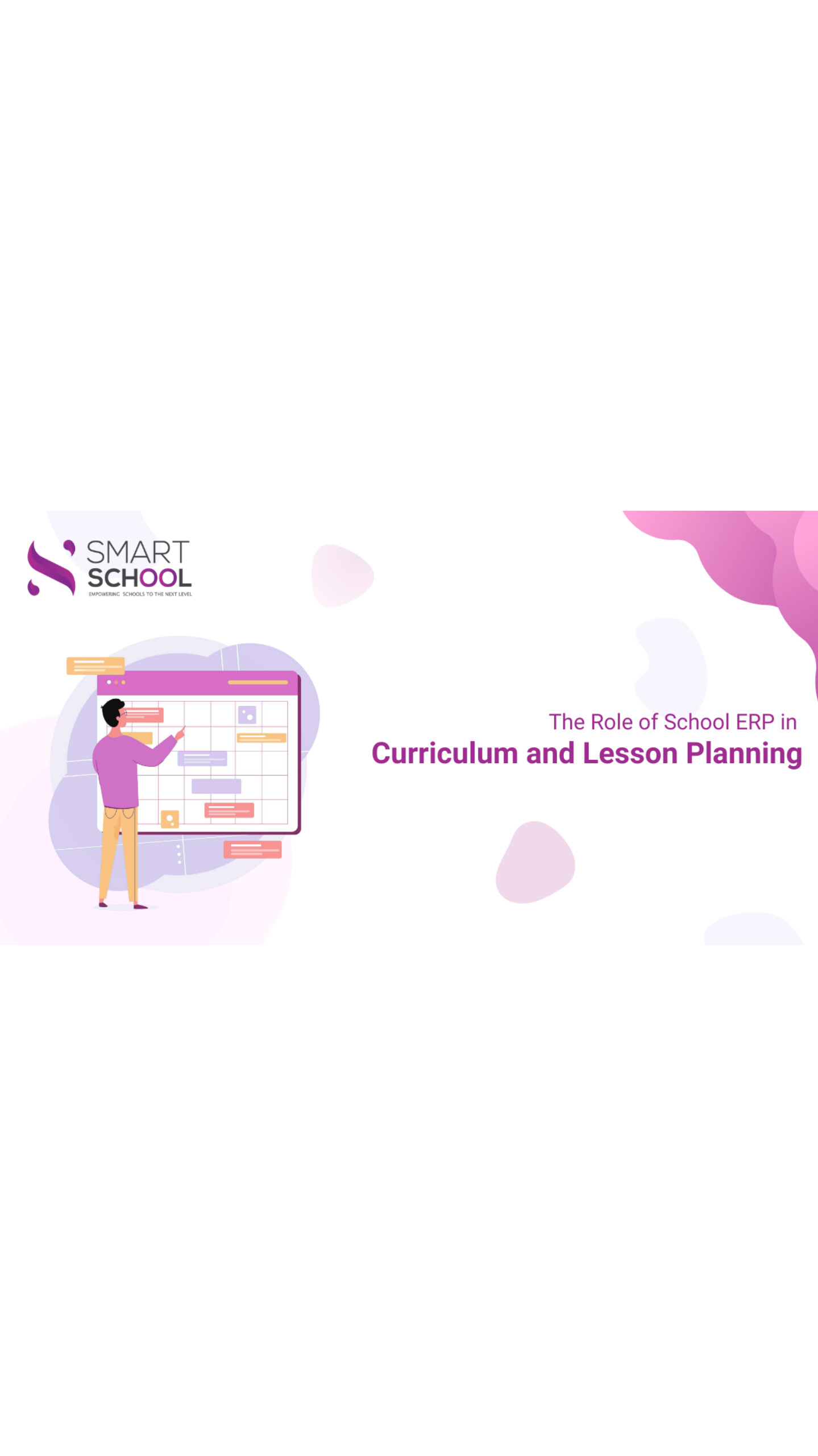
Schools are expected to deliver structured, engaging, and outcome-oriented learning experiences. Curriculum design and lesson planning play a vital role in achieving these goals. However, when these processes are managed manually, they often become fragmented, inconsistent, and time-consuming. This is where a School ERP emerges as a powerful tool, helping institutions plan, manage, and execute their academic framework efficiently.
A modern school management system does more than handle administrative tasks. It brings clarity, coordination, and consistency to curriculum planning and lesson execution, ensuring that academic objectives are met across all classes and departments.
Curriculum planning defines what students should learn, while lesson planning focuses on how that learning is delivered. Together, they ensure:
Without a centralized system, schools may face challenges such as syllabus delays, lack of uniformity across sections, and difficulty in tracking lesson progress. A school ERP addresses these challenges by providing a structured and transparent academic planning environment.
A School ERP enables administrators and academic coordinators to define and store the entire curriculum in a centralized digital platform. Subjects, units, learning objectives, and timelines can be clearly mapped for each grade and academic year. This centralized approach ensures consistency across departments and prevents deviations from the prescribed syllabus.
With easy access to curriculum data, teachers can align their lesson plans with institutional goals, board requirements, and learning outcomes.
One of the major advantages of a school management software is its ability to standardize curriculum implementation. Schools can create predefined templates for lesson structures, assessment methods, and learning milestones. This ensures uniform teaching standards across multiple sections or campuses.
Standardization also helps new teachers quickly adapt to the academic framework without confusion or delays.
School ERP allows teachers to create, submit, and manage lesson plans digitally. Instead of maintaining handwritten records or separate documents, lesson plans can be structured within the system based on:
This not only saves time but also enhances clarity and accountability.
Lesson planning becomes more effective when integrated with academic timetables. A School ERP connects lesson plans directly with class schedules, ensuring that lessons are delivered in the right sequence and within allocated periods.
One of the most valuable features of a school management system is real-time tracking. Administrators and academic heads can monitor:
This visibility helps identify gaps early and allows corrective action to maintain academic consistency.
A School ERP promotes collaboration among teachers by enabling shared access to curriculum and lesson plans. Educators teaching the same subject or grade can exchange resources, teaching strategies, and best practices through the platform.
This collaborative approach improves teaching quality and ensures that students receive a consistent learning experience, regardless of the teacher or section.
Curriculum planning is most effective when aligned with assessments. A school management software links lesson plans with assessment schedules, assignments, and exams. Teachers can design lessons based on expected learning outcomes and evaluate student performance accordingly.
This alignment helps schools maintain academic rigor while ensuring fair and objective assessment methods.
School ERP systems provide analytical insights into curriculum execution and lesson effectiveness. Academic leaders can analyze:
These insights support informed decision-making, curriculum improvements, and instructional planning for future academic years.
Education standards and learning methodologies evolve constantly. A School ERP offers flexibility to update curriculum content, lesson structures, and teaching strategies without disrupting ongoing academic activities.
Schools can adapt to new board guidelines, introduce innovative learning approaches, or integrate digital content seamlessly through the ERP platform.
Implementing a School ERP for academic planning offers several advantages:
These benefits collectively improve the quality of education delivered by the institution.
Curriculum and lesson planning form the foundation of effective teaching and learning. A modern School ERP transforms these processes by introducing structure, consistency, and visibility into academic operations. By integrating curriculum planning, lesson execution, and performance tracking into a single platform, schools can ensure smoother academic delivery and improved learning outcomes.
As educational institutions continue to evolve, adopting a comprehensive school management system is no longer a choice but a necessity. With the right ERP in place, schools can empower educators, support students, and create a future-ready academic environment.